

Before a tray ever touches a tooth, it’s manufactured through a specific physical process, and the properties of the plastic sheet used in that process directly determine how well the whole system delivers on its promise. The material itself isn’t just a clear container holding a shape; it’s an active part of the mechanism, and its properties are a genuine area of orthodontic research, not a settled, interchangeable detail.
If you’re asking how does Invisalign work in Georgetown, TX: a 3D scan plans your treatment digitally, then each tray is manufactured by thermoforming a sheet of specialized plastic over a 3D-printed model of your teeth at each planned stage, applying gentle pressure that shifts teeth gradually as you progress through the series. The specific thermoplastic material and how consistently it’s fabricated genuinely affect how predictably force is delivered, which is an active area of orthodontic materials research, not just a manufacturing footnote.
From Digital Plan to Physical Tray: The Fabrication Process
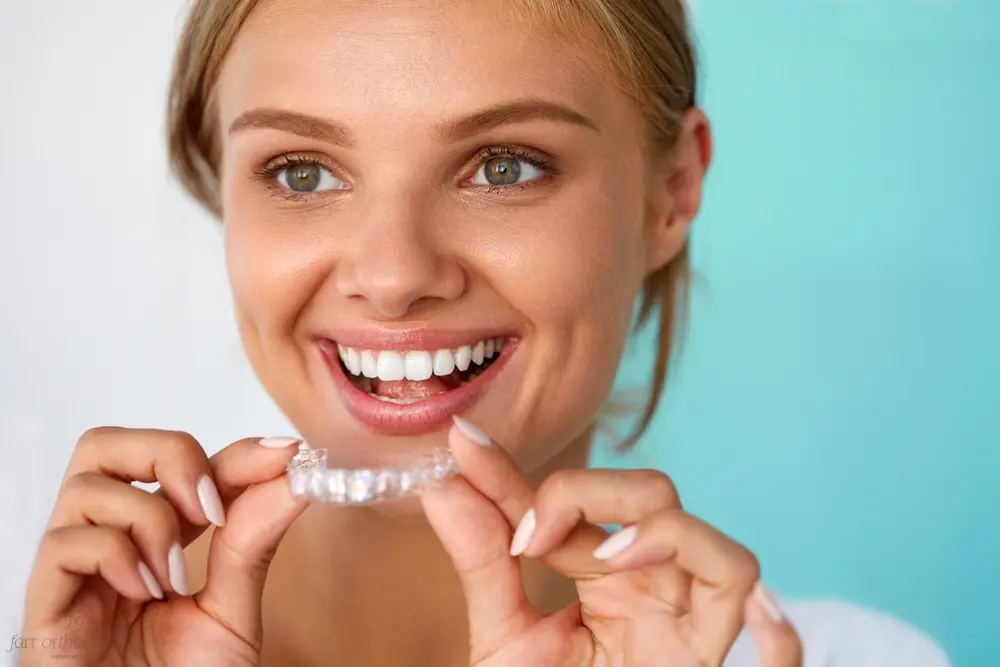
Once your treatment is mapped digitally, the software generates a series of 3D models, each representing your teeth at one specific stage of the planned movement. These models are 3D printed, and a sheet of thermoplastic material is then heated and formed over each model using vacuum pressure, a process called thermoforming, creating a tray shaped precisely to that stage’s target positions.
This is why each tray in your series looks nearly identical to the last but isn’t quite the same: it’s shaped around a slightly different target position, manufactured fresh for that specific stage rather than adjusted from a single mold.
Why the Material Itself Is an Active Ingredient, Not Just a Container
A tray doesn’t apply the same amount of force for its entire one-to-two-week wear period. Force is generally highest right after you insert a new tray and gradually decreases as the material relaxes and your tooth moves toward the target position, a pattern called force decay. Different thermoplastic materials decay at different rates, which is part of why aligner manufacturers use specific proprietary materials rather than generic plastic sheets: the material needs to maintain enough force for long enough to keep movement progressing, without starting so high that it risks discomfort or damage.
This is a genuine engineering tradeoff, not a marketing detail. A material that decays too quickly delivers less total movement per tray than intended; one that doesn’t decay enough can apply more sustained force than is comfortable or ideal.
Why Fabrication Consistency Matters
Dr. Samantha Farr’s published research specifically examined the reproducibility and consistency of thermoplastic materials used in aligner fabrication, including how different manufacturing methods affect the final thickness of the tray. Thickness consistency matters because a tray with variable thickness across its surface delivers less predictable force than one manufactured consistently, since thicker sections resist deformation differently than thinner ones.
This is part of why not all clear aligner products, even those using broadly similar processes, perform identically. The specific material formulation and how consistently it’s fabricated are genuine variables that affect how predictably a tray does its job, not interchangeable details invisible to the outcome.
Attachments and Precision Movement
Small, tooth-colored attachments bonded to specific teeth give a tray additional grip for movements like rotation that a smooth tray surface alone handles less reliably. These work alongside the material properties described above, since an attachment’s effectiveness also depends on the tray material maintaining consistent contact and force against it throughout the wear period.
Living With Invisalign
Trays come out for eating and drinking anything but water, and cleaning them with a soft brush and cool water (never hot, which can distort the thermoplastic material) keeps them functioning as designed. Wearing them 20 to 22 hours daily is what keeps the force-decay curve working as the plan intends.
Monitoring Your Progress
Visits every 6 to 10 weeks confirm your teeth are tracking with the original plan. If movement isn’t progressing as expected, which can sometimes reflect individual biological variation rather than anything about the tray itself, your orthodontist adjusts the plan accordingly.
Frequently Asked Questions
Does the type of plastic used in my aligners actually matter?
Yes. Different thermoplastic materials have different force-decay properties and thickness consistency, which genuinely affects how predictably a tray delivers force over its wear period. This is an active area of orthodontic materials research, not just a manufacturing detail.
Why does my tray feel tightest right when I first put it in?
This reflects force decay: pressure is generally highest immediately after insertion and decreases gradually as the material relaxes and your tooth moves toward its target position over the following days.
Can I speed up treatment by getting a stiffer or different material?
Not reliably. Material properties are chosen to balance effective movement against comfort and safety, and simply choosing a stiffer material isn’t a safe way to accelerate treatment, since force decay is part of what keeps movement within a safe biological range.
Does inconsistent tray thickness actually affect my results?
It can affect how predictably force is delivered, which is part of why fabrication consistency is a genuine quality factor, not just a cosmetic detail, in aligner manufacturing.
Are there some cases Invisalign can’t fix?
Yes. Severe skeletal discrepancies, certain significant bite corrections, or movements that need more mechanical control than trays and attachments can reliably provide are sometimes better addressed with braces or, in some cases, a combination of orthodontics and jaw surgery. Whether Invisalign is the right fit for a specific case is something to work through during a consultation, since it depends on the details of that individual case.
Sources. Published research on thermoplastic material properties and fabrication-method effects on clear aligner thickness and force delivery; clinical and administrative observations from Farr Orthodontics Georgetown, Georgetown, TX.

Related Reading
- How to Fix Overbite in Georgetown, TX
- Clear Braces vs Metal Braces in Georgetown, TX
- Invisalign in Georgetown
Get Treatment Planned Around the Science, Not Just the Software
Dr. Farr’s background in aligner materials research informs how treatment is planned at Farr Orthodontics Georgetown, down to the material properties behind each tray.
Free consultation for new patients.